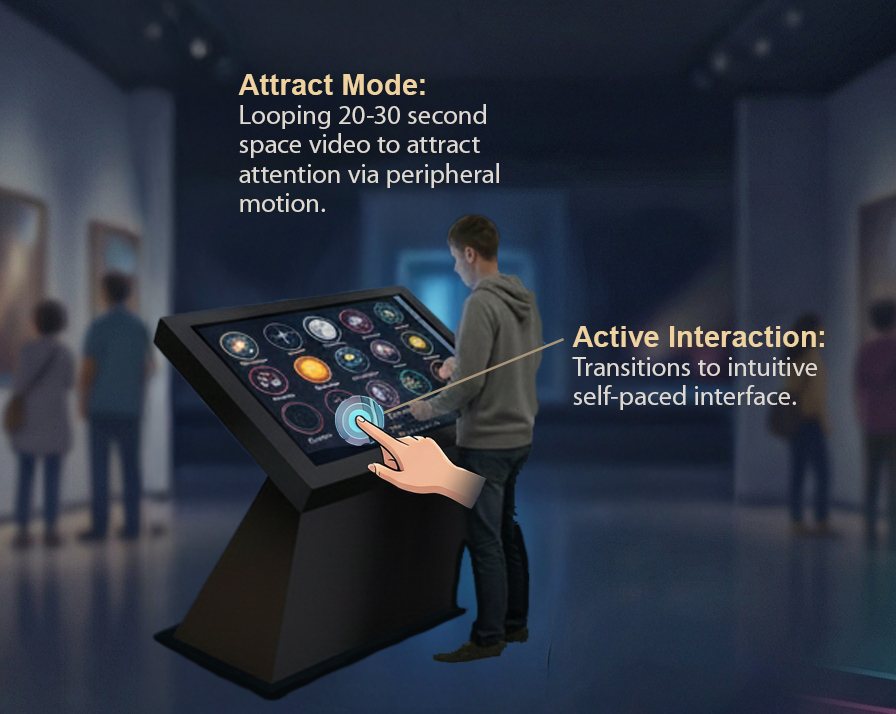
We create interactive touchscreen experiences that integrate seamlessly into physical environments. Our systems are built for interpretive storytelling, visitor engagement, and reliable 24/7 operation in museums, science centers, and branded environments.

The default environment is full of distraction and lacks control for admins. With our system, powered by ArborXR, you can guide users, customize the environment, moderate apps, and lock down the headset as you see fit.
When users put on a VR or AR headset, it should be effortless. Remove distractions and keep users focused with an intuitive experience that’s easy to use. The Home landing upon startup or app exit gives users an environment to launch, switch, and pause the applications they want them to.
Make users feel at home when they put on any XR headset by launching them into the ideal environment. Easily customize the app launcher with your own 360-image and replace the branding with your own.

Use almost any Android-based AR or VR headset. Including popular brands like Oculus (Meta), Pico, HTC VIVE, Vuzix, DPVR, and more.
View our full list of supported XR devices.
Every experience begins with a simple question: What is the interpretive goal of this moment in the visitor journey?
Our interactive kiosks reinforce exhibit themes, support multi-sensory learning, increase dwell time, and integrate naturally into the spatial narrative.
Enhances physical storytelling
Supports visitor flow and dwell time
Accessible for diverse audiences
Designed for high‑traffic environments
Built for long‑term exhibit use
Our systems are engineered for the realities of museum environments:
24/7 duty cycleOffline operation (no network dependencies)
Instant-on SSD media playback
Hardened glass touchscreens
ADA-compliant interaction zones
Flexible mounting options
Proper cable management and service access
No cloud failures, no subscription traps
Whether you’re integrating into a custom plinth, wall niche, or freestanding enclosure, our platform adapts to your design, not the other way around.
Each experience is built on a modular architecture that allows designers to customize content, color palettes, and interpretive goals.
Samples of our application development:
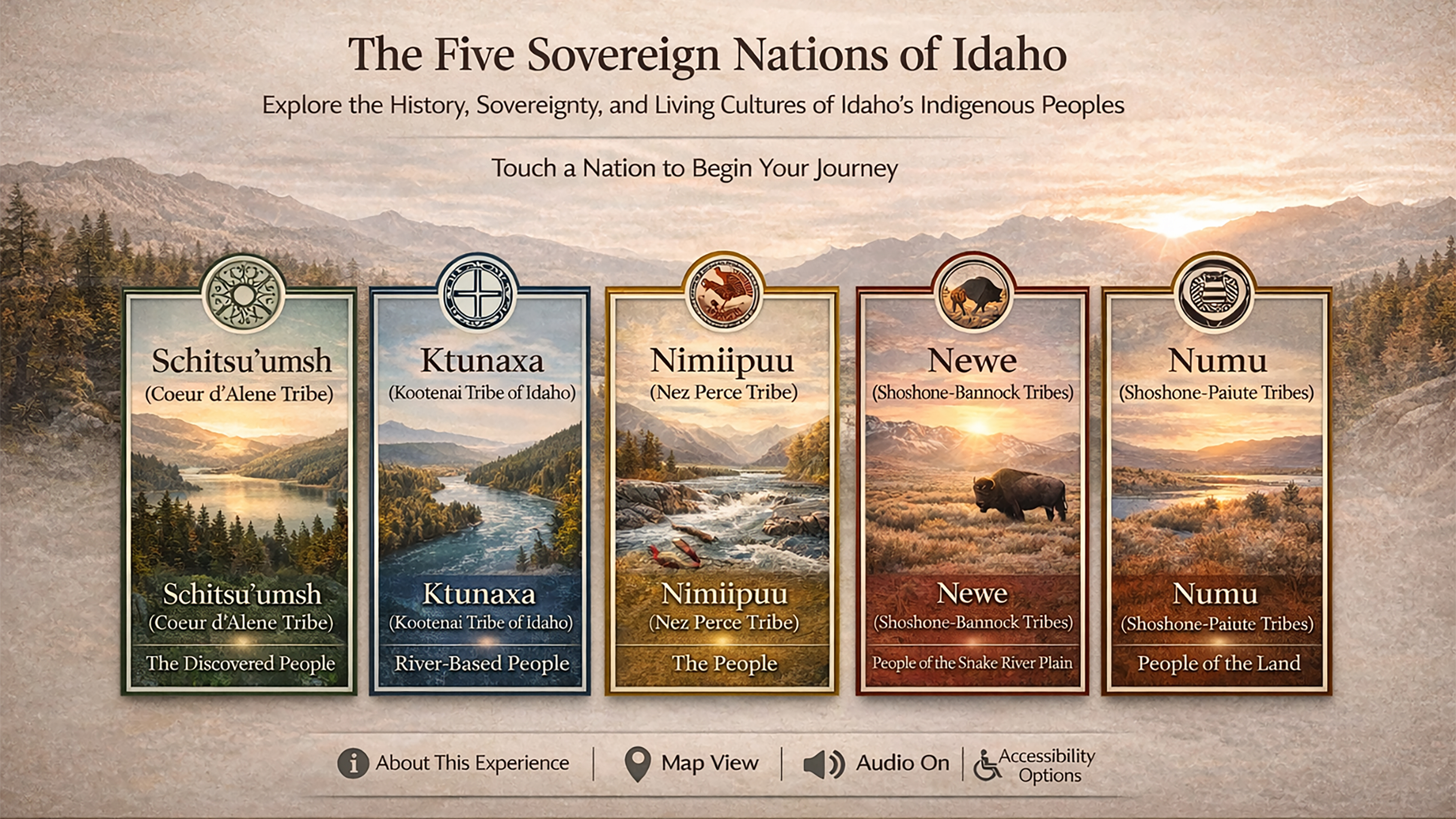
A cultural journey through the
five sovereign nations of Idaho.
The Idaho Indigenous Peoples Interactive Kiosk is an immersive, touch-driven experience that brings the history, culture, and living traditions of Idaho’s Native nations to life.
Designed for museums, cultural centers, and educational environments, this exhibit transforms complex histories into engaging, accessible storytelling through interactive media, visual design, and layered exploration. Visitors are invited to discover the voices, resilience, and sovereignty of the five federally recognized tribes of Idaho: the Coeur d’Alene Tribe, Nez Perce Tribe, Shoshone-Bannock Tribes, Shoshone-Paiute Tribes, and Kootenai Tribe of Idaho.
Design Intent:
To help visitors go from a basic understanding of Indigenous history to a deeper recognition that these nations are living, sovereign communities with ongoing cultural identities, governance systems, and connections to the land.
Exhibit Fit:
Museums
Cultural Heritage Centers
Educational Institutions (K–12 & Higher Ed)
Tribal Cultural Experience
Experience Strategy:
Layered Information Architecture
Interactive Touch Navigation
Cinematic Visual Storytelling
Accessible Design
Balanced Content Delivery

A tactile journey through planets,
moons and orbital mechanics.
Solar System Explorer is an interactive astronomy module that transforms complex celestial mechanics into intuitive, touch‑driven exploration.
Designed for planetariums, dark sky centers, and STEM galleries, this experience helps visitors understand the structure, motion, and diversity of our solar system through visual storytelling and hands‑on discovery.
Design Intent:
To shift visitors from “the solar system is a set of planets” to “the solar system is a dynamic, gravitationally‑linked system governed by physics, motion, and scale.”
The experience uses tactile exploration, cinematic visuals, and layered information architecture to make astronomy accessible to all ages.
Exhibit Fit:
Planetariums
Dark Sky Centers
STEM Galleries
Space Exhibits.
Experience Strategy:
Layered information architecture
High-contrast UI for low-light environments
Supports both quick hits and deep dives
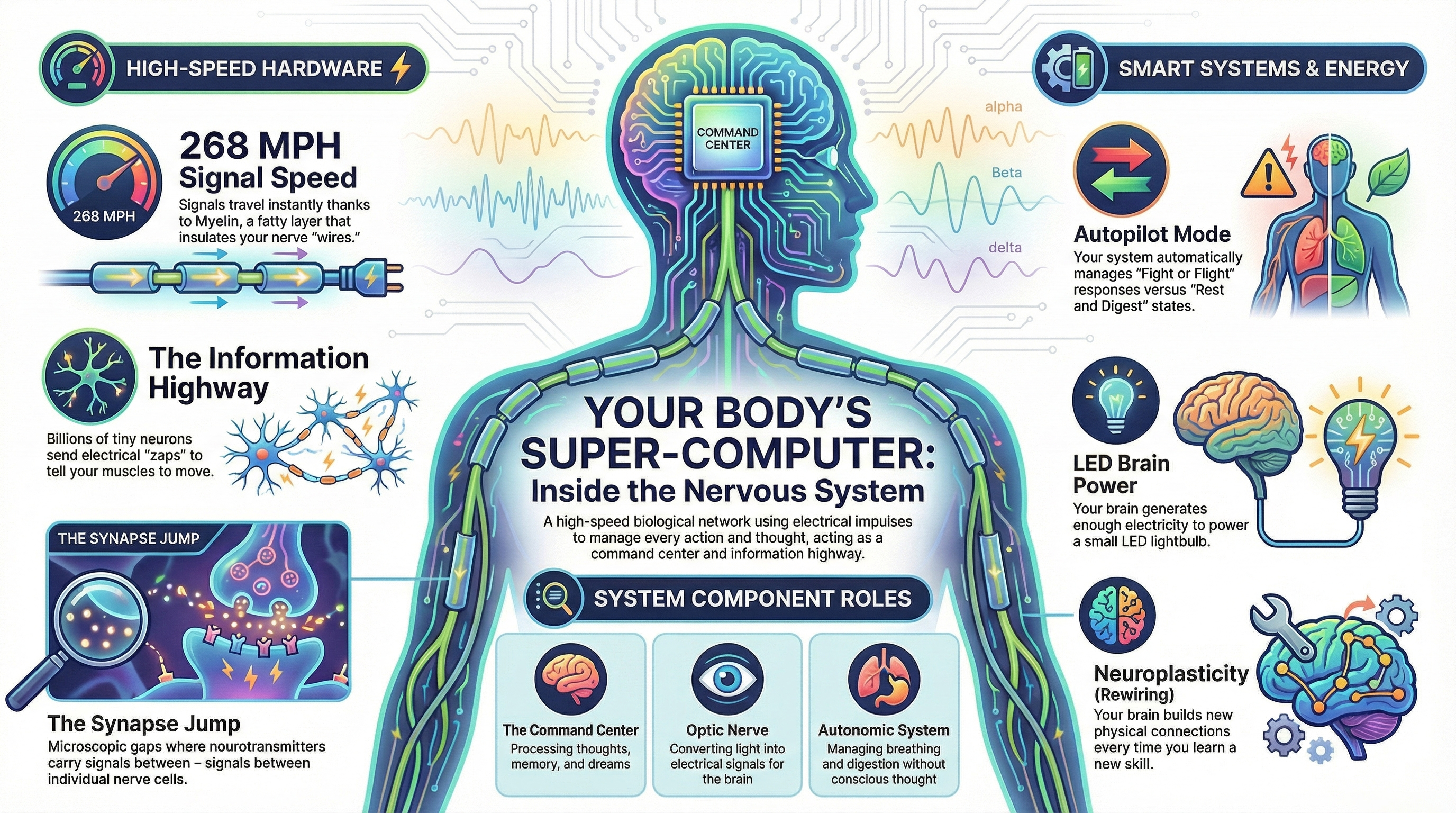
A multi-layer anatomical explorer for health
and biology exhibits.
Human Body Interactive is a touch‑driven anatomical experience that reveals the complexity of the human body through layered visualizations, animations, and interactive models.
Designed for science centers, medical museums, and health education spaces, this module helps visitors understand how systems work together to sustain life.
Design Intent:
To shift visitors from “the body has organs” to “the body is an interconnected network of systems, signals, and biological engineering.”
The experience uses layered anatomy, motion graphics, and intuitive navigation to make complex biology accessible to all ages.
Exhibit Fit:
Science centers, medical museums
and health education spaces.
Experience Strategy:
Multi-level content
Family-friendly navigation
Supports curriculum-aligned learning
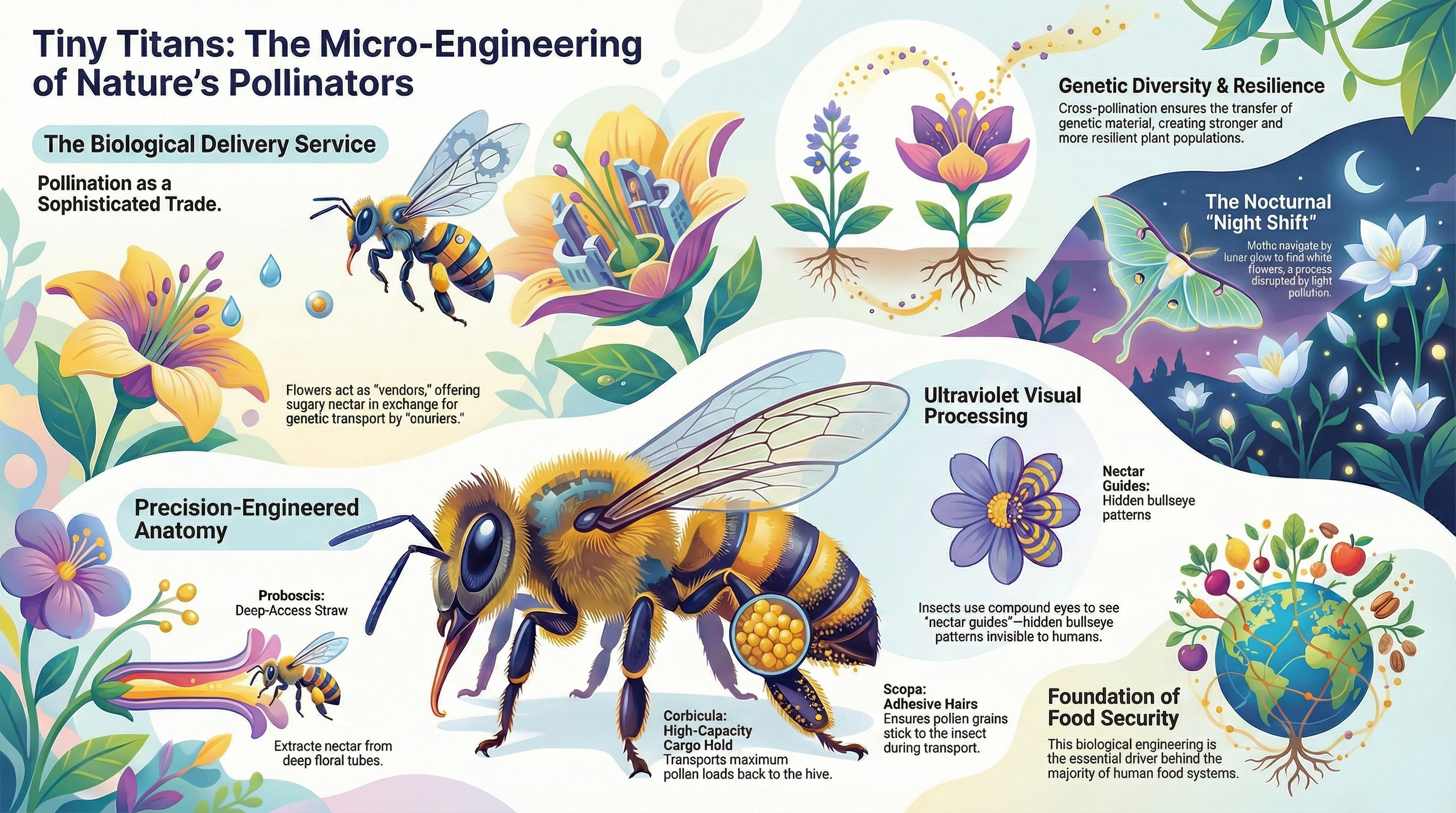
An Interactive Exploration of Pollinators, Biological Engineering & Ecological Balance.
Tiny Titans of Nature is an immersive, touch‑driven exhibit module that reveals the extraordinary biological engineering of the world’s smallest but most essential creatures.
Designed for museums, science centers, and environmental education spaces, this experience transforms casual curiosity into deep ecological understanding through a tiered, narrative‑driven learning architecture.
Design Intent:
To shift visitors from “pollinators are cute” to “pollinators are critical biological machines that sustain global food systems.”
The experience uses visual wonder, mechanical insight, and ecological context to build a complete understanding of how insects and mammals support human and natural ecosystems.
Exhibit Fit:
Natural history museums
Ecology & conservation galleries
Children’s museums
Botanical gardens
Environmental education centers
Science centers and STEM spaces
Experience Strategy:
Real-time animations
Intuitive map-based navigation
Designed for group interaction
We Speak the Language of Exhibit Design
SEGD members value:
Narrative cohesion
Visitor flow
Interpretive clarity
Spatial integration
Materiality and craft
Reliability in public spaces
Our platform is built around those same principles.
We support your workflow:
We work with your fabricator
We work with your AV integrator
We work with your media team
We work with your exhibit designer
We work with your architect
We’re not a vendor.
We’re a collaborative partner in the design process.
Systems Key Features:
The Synapse Trigger:
Touch the screen to initiate a high-speed electrical "zap" that
demonstrates how neurons communicate.
Autopilot Visualizer:
Understand the Autonomic System through interactive
"Rest and Digest" vs. "Fight or Flight" comparisons.
The Optic Connection:
A profound look at how the brain processes light and why our internal clock relies on natural darkness.
Technical Specifications:
The Reality Expanded Standard Hardware:
Commercial-grade, hardened glass touchscreens designed for 24/7 high-frequency use.
Performance: SSD-driven "Zero Latency" architecture; 1080p instant video playback.
Connectivity: 100% offline operation, no Wi-Fi dependencies or buffering.
UX Design: Three-level depth hierarchy with automatic idle reset for high-traffic flow.
At Reality Expanded, we operate at the intersection of education, design, and engineering to produce original systems that engage the mind and solve real-world needs. From puzzle-based STEM labs to precision-engineered hardware, our mission is to deliver purpose-built products that reward curiosity, encourage persistence, and grow with the user.